
Marine debris, often referred to as marine litter or ocean trash, is a global environmental issue that poses significant threats to marine ecosystems, wildlife, and human societies. Marine debris is a term encompassing a wide array of discarded materials that find their way into oceans, seas, and other water bodies. These materials can vary from plastics and fishing gear to glass, rubber, and metal.
The origins of marine debris are rooted in both land-based and ocean-based sources.
Land-Based Sources:
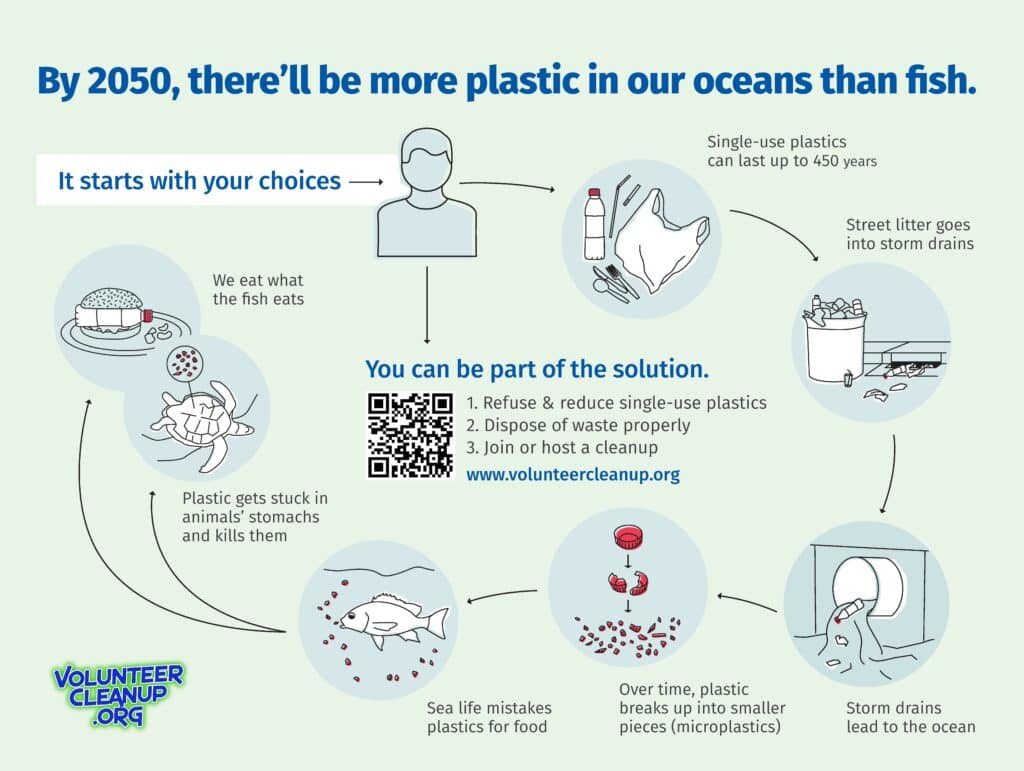
An estimated 80% on marine debris originates from human activity on land. Poor waste management, inadequate recycling systems, and improper disposal of waste play a pivotal role in introducing debris into marine environments. Urban areas near coastlines often generate vast amounts of plastic waste due to consumer culture and unsustainable packaging practices. These plastics, often lightweight and durable, can be easily transported by wind and through stormwater systems into rivers and eventually flow into the oceans.
Another significant land-based source is litter from recreational activities such as beachgoers leaving behind trash, picnicking, or camping near water bodies. Inadequate infrastructure, such as lack of trash bins and public awareness campaigns, contributes to marine debris. Additionally, industrial activities close to coastlines, if not regulated properly, can discharge pollutants like heavy metals, chemicals, and plastics directly into the ocean.
Ocean-Based Sources:
While land-based sources contribute significantly to marine debris, an estimated 20% of marine debris comes from ocean-based sources. Fishing activities, both commercial and recreational, are a substantial source of marine debris. Lost or abandoned fishing gear, such as nets, lines, and traps, termed “ghost gear,” continue to trap and kill marine life long after they are discarded. These items can drift across vast distances, ensnaring marine animals and damaging sensitive habitats like coral reefs.
Shipping and maritime transportation also contribute to ocean-based marine debris. Containers lost at sea, as well as accidental spills of cargo like plastics pellets (nurdles) during transport, can directly introduce debris into marine ecosystems. Even though regulations and monitoring have improved, accidents still occur, highlighting the need for continued vigilance and improved waste management practices within the shipping industry.
Marine Debris is a global issue:
Marine debris is not confined to specific regions or countries. It travels across vast ocean currents, connecting distant coasts and ecosystems. Debris originating in one part of the world can eventually wash up on shores thousands of miles away. This interconnectedness underscores the necessity for a collaborative global approach to address the issue.
There are 5.25 trillion pieces of plastic debris in the ocean. The Great Pacific Garbage Patch is a floating island of trash that is twice the size of Texas. By the year 2050, there will be more plastic in the ocean than fish. On our local cleanups, hundreds of pounds are regularly gathered from each location.
From the food we eat, to the places we recreate, to the properties we invest in, to the animals we are enamoured with, to our own health, Marine Debris affects us all. Marine debris endangers marine life as animals become entangled in plastic debris, or when they mistake plastic for food, thereby also contaminating the fish we eat. Recent studies have found plastic particles at the top of the highest mountains, in the deepest parts of the sea and even in our blood stream. Marine debris tarnishes the beauty of pristine coastlines and can cause economic loss to tourism and real estate economies.
Marine debris is a complex and global issue arising from a combination of land-based and ocean-based sources. It is a stark reminder of the environmental consequences of unsustainable human activities. To mitigate and ultimately prevent marine debris, concerted efforts are required at individual, community, industry, and governmental levels. Through collaborative action, awareness-raising, and innovative solutions, we can strive to safeguard our oceans and preserve their invaluable ecosystems for generations to come.
Never Litter
• Always dispose of waste properly, no matter where you are, because trash on the street goes into storm drains, canals, rivers, and ultimately out to the ocean.
• Educate smokers: cigarette butts are the number 1 most littered item in the world. Filters are made of cellulose plastic and are not biodegradable.
Reduce, Refuse, Reuse, Repair, *then* Recycle
If you don’t create the waste in the first place, you don’t have to worry where it goes.
• Reduce the amount of waste you produce with reusable water bottles, coffee mugs, & shopping
bags instead of disposable ones.
• Skip the Straw by politely saying “No Straw Please, I’m protecting the Turtles” at restaurants and bars.
• Reuse single-use plastics at least twice and then recycle or dispose of properly.
• Seek out alternative items that aren’t plastic.
Clean it Up
• Join a local neighborhood, shoreline, or waterway cleanup. Find one at volunteercleanup.org
• Host your own cleanup! Post it to our website to recruit volunteers. Organize a group of friends or co-workers and spend a rewarding day. If you need help, contact us and we will guide you.
• Commit to pick up 1 piece of litter a day.
• Even if you don’t live near the ocean, picking up street trash prevents ocean trash. All storm drains lead to waterways.
Be an Advocate
• Ask local restaurants to switch to environmentally friendly to-go packaging.
• Educate elected officials, city staff, & local businesses by inviting them to your cleanups so they see the problem first hand.
• Speak at your commission hearings and show pictures of the problem. Or share a more impactful message by bringing in the bags of trash you collected.
• Ask questions of your local City or County staff: What is the schedule for cleaning the streets? Are we cleaning all the streets equally, or are we prioritizing the wealthy and tourist areas? How frequently are we cleaning the storm drain systems (the answer should be at least once a year before the rainy season)? Do we have a waterway cleanup contractor?
VolunteerCleanup.Org engages volunteers to cleanup their neighborhoods, shorelines, and waterways as a way to raise awareness about marine debris and encourage people to reduce their reliance on single-use plastics.
VolunteerCleanup.Org is a project of Miami Dade Coastal Cleanup, Inc, a 501(c)3 non-profit registered with the IRS (EIN 42-1766017)